
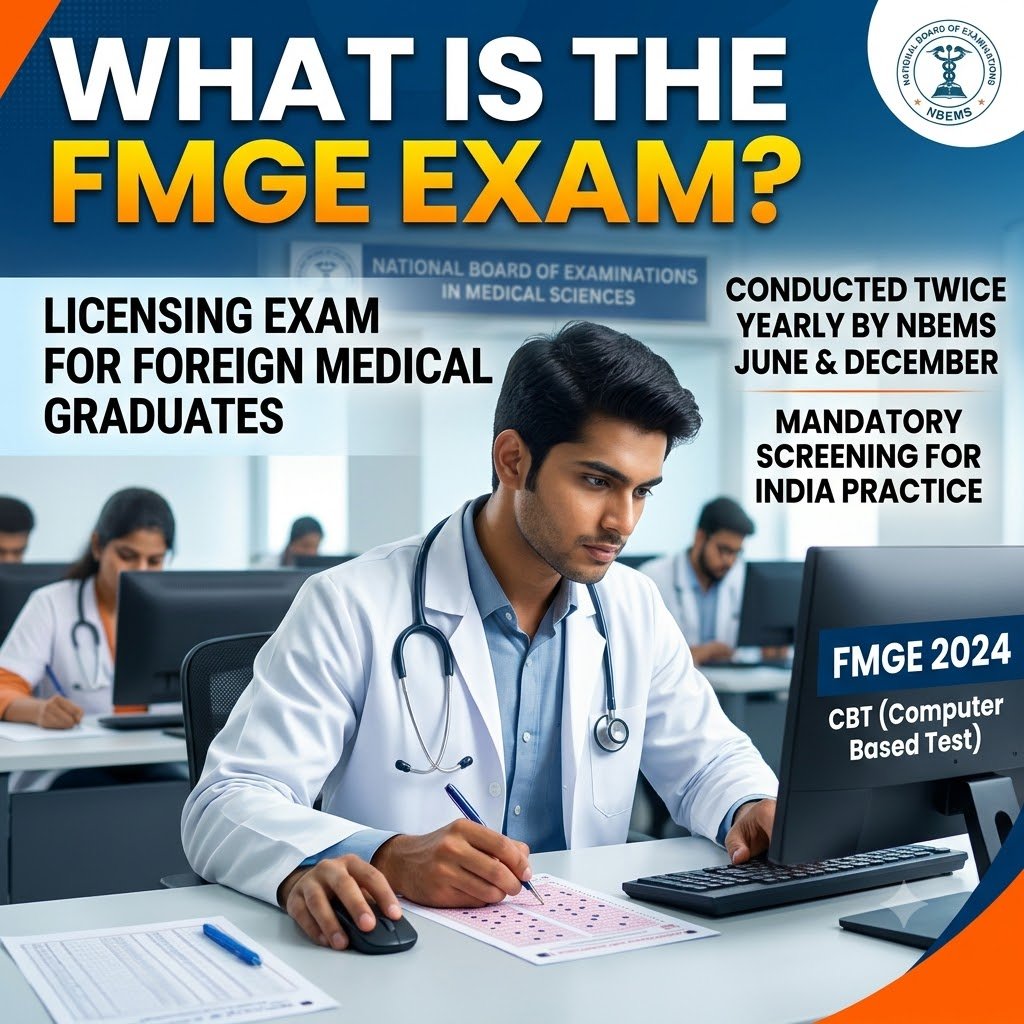
Thousands of aspiring doctors travel abroad every year to pursue their medical dreams. But returning home with a medical degree is only half the battle. Before they can don their white coats and begin practicing in India, they face one final, formidable hurdle.
The Foreign Medical Graduates Examination (FMGE) is the ultimate gatekeeper for these aspiring professionals.
But what exactly is this high-stakes exam, and why is it so crucial?
The Mandatory Gateway to Practice
The FMGE serves as a mandatory screening and licensing examination for Indian citizens or Overseas Citizens of India (OCIs) who have obtained their primary medical qualifications from institutions outside the country. Without clearing this stringent test, foreign medical graduates cannot register with the National Medical Commission (NMC) or any State Medical Council, effectively barring them from practicing medicine in India.
Who Holds the Reins?
This rigorous assessment is meticulously designed and conducted by the National Board of Examinations in Medical Sciences (NBEMS). Known for maintaining the highest standards of medical education and evaluation in India, NBEMS ensures that returning graduates possess the required knowledge and skill parity with students trained within the country.
A Bi-Annual Opportunity
The stakes are undeniably high, but candidates are given two distinct windows each year to prove their mettle. The NBEMS conducts the FMGE twice annually—once in June and again in December. This bi-annual schedule provides a crucial buffer, allowing graduates adequate time to prepare and attempt the exam in a cycle that best aligns with their graduation timelines.
As the next testing window approaches, thousands of graduates are currently deep into their preparations, fully aware that this single examination stands between them and their lifelong dream of practicing medicine in their home country. Will they clear the hurdle? The countdown begins.