
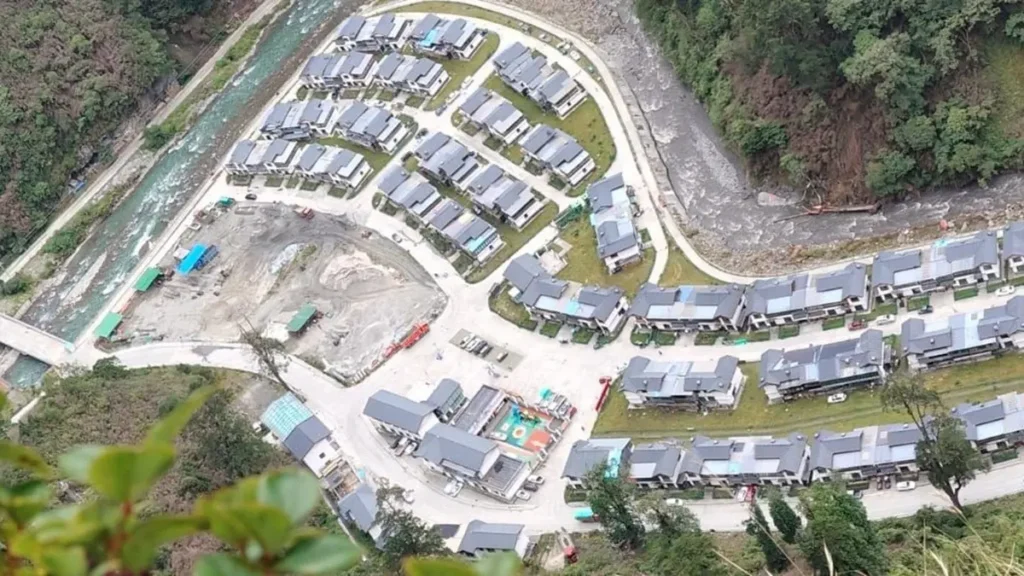
Recent satellite imagery and escalating political rhetoric have once again cast a spotlight on the treacherous and heavily militarized India-China border in Arunachal Pradesh. With whispers of new Chinese settlements echoing through the valleys, the nation is left asking a critical question: Are the reports of fresh Chinese incursions a chilling reality, or merely recycled propaganda?
The Satellite Revelations and Political Firestorm
The controversy ignited in late June 2026 when high-resolution satellite images surfaced, allegedly showcasing the Chinese People’s Liberation Army (PLA) constructing new roads, villages, and military-linked infrastructure. Reports specifically pointed to encroached settlements deep inside the Taksing area of Arunachal Pradesh.
This prompted an immediate political uproar. The Arunachal Pradesh Congress Committee (APCC) and the All India Adivasi Congress demanded accountability, accusing the government of downplaying serious threats to national security. Local voices from border areas claimed increased Chinese construction activities, pushing the opposition to demand a parliamentary panel to assess the ground reality along the Line of Actual Control (LAC).
The Indian Army Stands Firm
In the face of mounting speculation, the Indian Army issued a categorical and robust denial. Dismissing the media reports of recent PLA encroachments and camp establishments as entirely “incorrect and without basis,” the military leadership emphasized that the situation along the northern borders remains stable, albeit sensitive.
Outgoing Army Chief General Upendra Dwivedi reassured the nation that the Indian Army maintains a firm, credible, and vigilant posture. Through well-established mechanisms, including over 1,100 annual ground-level interactions, flag meetings, and hotlines, both sides continue to address routine border issues and differing perceptions of the LAC.
A Strategic Waiting Game?
While the government—including Union Minister Kiren Rijiju—has rejected claims of fresh incursions, the geopolitical undercurrents remain complex. Experts suggest that Beijing continues to play a strategic waiting game, finding value in keeping the LAC ambiguous rather than officially settling the boundary.
As the debate rages on between satellite interpretations and official military statements, one thing remains crystal clear: the McMahon Line continues to be a geopolitical flashpoint requiring unwavering vigilance.