
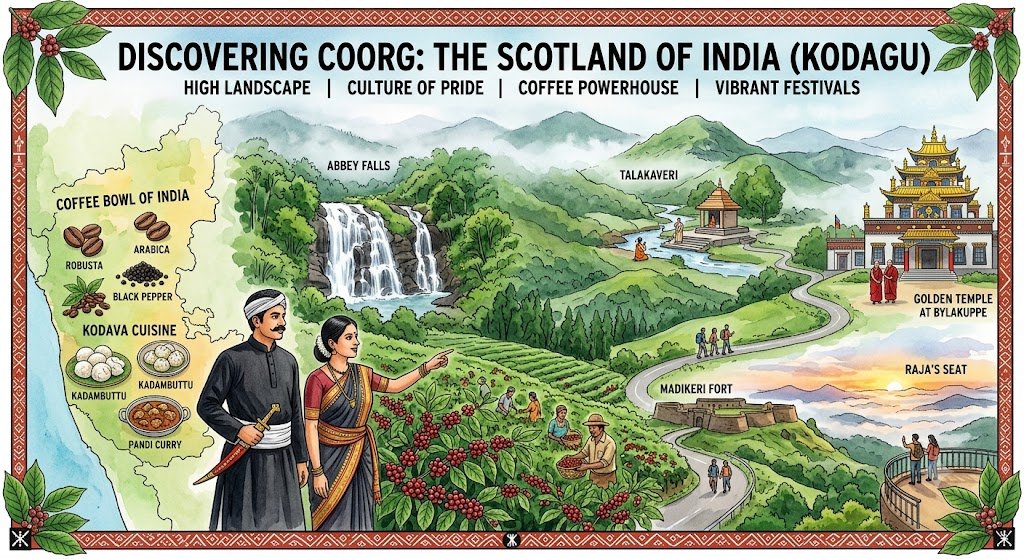
Nestled within the lush embrace of the Western Ghats in Karnataka lies a destination that effortlessly captures the heart of every traveler. Characterized by its rolling hills, deep green valleys, and perpetual mist, this breathtaking hill station is widely celebrated as the “Scotland of India”.
This enchanting region is officially known as Kodagu, though it is more famously referred to as Coorg. From its aromatic coffee estates to its rich martial history, here is a detailed look at everything that makes Coorg a true highland paradise in South India.
Why is Coorg Called the “Scotland of India”?
The poetic nickname was coined during the British colonial era. When British officials and Scottish planters settled in the region, the atmospheric landscape felt incredibly nostalgic. The striking similarities that earned Coorg this title include:
- Highland Landscapes: Just like the Scottish Highlands, Coorg features rolling green hills, dense forests, and dramatic mountain peaks.
- Misty and Cool Climate: Unlike the extreme heat of the Indian plains, Coorg enjoys a persistently cool climate with frequent drizzling and thick morning fog.
- A Culture of Pride: Much like the Scots, the local inhabitants of Coorg have a fierce sense of pride, distinct traditional attire, and a deeply rooted martial culture.
- Plantations Over Distilleries: While Scotland is famous worldwide for its whisky distilleries, Coorg substitutes this with vast, fragrant expanses of coffee plantations.
The Coffee Bowl of India
Besides its Scottish nickname, Coorg is also hailed as the “Coffee Bowl of India”. The district is an agricultural powerhouse, standing as the largest producer of both coffee (Robusta and Arabica) and black pepper in the country. Karnataka accounts for nearly 70% of India’s coffee production, and Coorg alone contributes an astonishing 33% of that total.
The Unique Culture of the Kodavas
Coorg is not just defined by its geography, but by its native people—the Kodavas. This ethnic group boasts a rich history and unique customs that set them apart from neighboring communities:
- Martial Heritage: The Kodavas are a martial community with a long history of bravery, and many have served with distinction in the Indian Armed Forces. Uniquely, they are historically exempt from requiring a license to carry firearms in India.
- Distinctive Attire: Traditional dressing is a major cultural pillar. Men wear a wraparound black robe called the Kupya and carry a ceremonial dagger known as the Peeche Kathi. Women drape their sarees uniquely, tucking the pleats at the back rather than the front.
- Vibrant Festivals: The community celebrates distinct festivals such as Kailapodh, which honors and worships their traditional weapons, and Puthari, the grand harvest festival.
- Exceptional Cuisine: Coorgi food is heavily rice-based, featuring items like Kadambuttu (rice dumplings). Their signature dish is Pandi Curry (pork curry), uniquely flavored with Kachampuli, a dark, tart vinegar extracted from a local fruit.
Top Places to Visit in Coorg
If you are planning a trip to experience this southern highland, here are the must-visit attractions:
- Madikeri: The district headquarters, featuring colonial-era structures, the historical Madikeri Fort, and Raja’s Seat—a gorgeous viewpoint perfect for watching evening clouds roll over the valleys.
- Abbey Falls: Located a short drive from Madikeri, this famous waterfall cascades dramatically through lush coffee plantations into a rocky gorge.
- Talakaveri: Situated in the Brahmagiri hills, this sacred site marks the origin point of the holy River Kaveri.
- Dubare Elephant Camp: Nestled on the banks of the Kaveri, this conservation center allows visitors to interact with elephants that were historically trained for the Mysore Dasara.
- Namdroling Monastery (Golden Temple): Located in Bylakuppe, this magnificent structure is part of the second-largest Tibetan settlement in India.
Planning Your Trip
Coorg remains a welcoming retreat throughout the year, but the best time to visit depends entirely on what you want to experience. For those looking to truly embrace the “Scotland” vibe with misty mornings and a crisp chill, the winter months between October and February are ideal. The monsoon season (June to September) transforms the region into an incredibly lush, green paradise, though heavy rains can restrict some outdoor activities.
Reaching Coorg is a beautiful journey in itself. It is located roughly 5 to 6 hours away from Bangalore by road, offering a scenic drive that winds through quaint towns, dense forests, and endless spice estates.
Tags
scotland of india, coorg tourism, kodagu karnataka, places to visit in coorg, coffee bowl of india, kodava culture, south india hill stations, madikeri travel guide.