
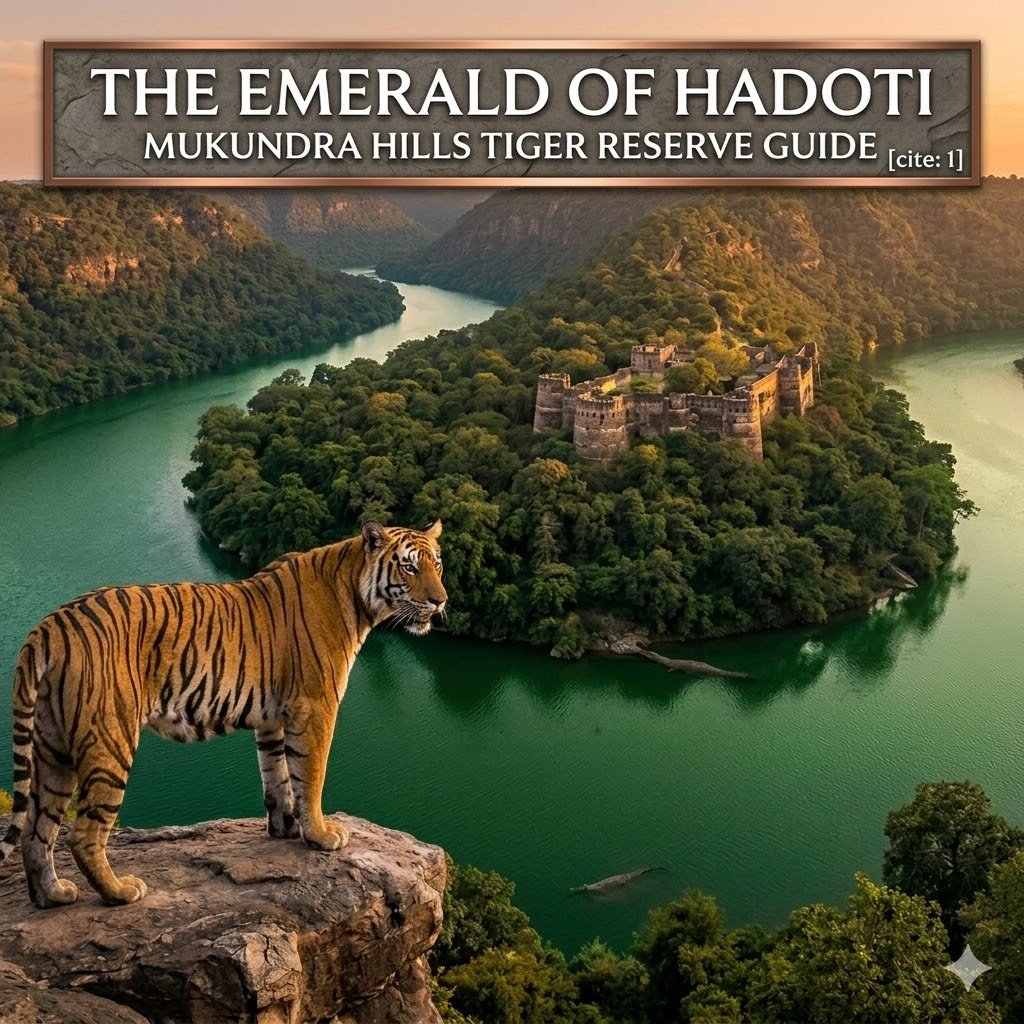
Nestled in the southeastern region of Rajasthan, the Mukundra Hills Tiger Reserve (MHTR) stands as a testament to the state’s rich biodiversity and dedicated conservation efforts. Known for its thick forests, historical ruins, and the meandering Chambal River, Mukundra Hills is a vital ecological hotspot. As Rajasthan’s third tiger reserve—following the famous Ranthambore and Sariska—it serves as a crucial habitat for the majestic Bengal Tiger and a diverse array of flora and fauna.
Spread across four districts of Rajasthan—Kota, Bundi, Chittorgarh, and Jhalawar—this pristine wilderness offers a unique blend of ecological wealth and historical grandeur, making it a fast-emerging destination for wildlife enthusiasts and nature photographers.
The Formation and History
Mukundra Hills Tiger Reserve was not built overnight; it is an amalgamation of deeply historical and ecologically sensitive zones. The reserve was officially declared a National Park in 2004 and subsequently notified as a Tiger Reserve in 2013 to de-congest the tiger population of Ranthambore.
The total reserve spans an area of over 759 square kilometers and is formed by combining three distinct wildlife sanctuaries:
- Darrah Wildlife Sanctuary: Once the royal hunting preserve of the Maharaja of Kota.
- Jawahar Sagar Wildlife Sanctuary: Known for its aquatic biodiversity and the Jawahar Sagar Dam.
- National Chambal Gharial Sanctuary: A vital riverine ecosystem protecting the critically endangered Gharial.
Geographical Marvels and River Systems
The geography of Mukundra is what makes it truly spectacular. The reserve is flanked by two parallel mountain ranges—the Mukundra and the Gagrola—which form a natural valley.
The lifeblood of this forest is its intricate river system. Four major rivers flow through or along the boundaries of the reserve:
- Chambal River: The primary water source, ensuring a perennial water supply for the wildlife.
- Kali Sindh: Flowing through the southern fringes.
- Ahu and Ramzan Rivers: Smaller tributaries that feed the forest’s deep ravines and valleys.
This unique topography of deep ravines, dense deciduous forests, and riverine valleys creates a natural, enclosed fortress for the wildlife.
Flora and Fauna: Beyond the Bengal Tiger
While the Bengal Tiger is the apex predator and the star attraction of MHTR, the reserve is a thriving ecosystem hosting a wide variety of wildlife.
Wildlife Profile:
- Predators: Indian Leopards, Indian Wolves, Striped Hyenas, and Sloth Bears.
- Herbivores: Chinkara (Indian Gazelle), Sambar deer, Nilgai (Blue Bull), and Spotted Deer (Chital).
- Aquatic Life: The Chambal river section is a critical breeding ground for Mugger crocodiles, the critically endangered Gharials, and the rare Gangetic River Dolphins.
- Avian Species: The reserve is a bird watcher’s paradise, hosting over 250 species of birds, including the Indian Peafowl, vultures, and various migratory birds during the winter.
The vegetation is primarily categorized as dry deciduous forest, dominated by Dhok trees (Anogeissus pendula), which turn lush green during the monsoon and shed their leaves in the dry summer, completely altering the landscape’s color palette.
Historical Significance and Tourism
Mukundra Hills is not just about wildlife; it is heavily steeped in Rajput history. The dense forests once served as a natural defense and a royal retreat.
Key Attractions Inside and Around the Reserve:
- Gagron Fort: A UNESCO World Heritage Site located at the confluence of the Ahu and Kali Sindh rivers, right on the edge of the reserve. It is one of the finest examples of a Jal Durg (Water Fort).
- Abheda Mahal: A historic palace featuring a picturesque pond, located near the reserve’s periphery.
- Garadia Mahadev Temple: Offering a breathtaking, panoramic gorge view of the Chambal River taking a horseshoe bend—one of the most photographed spots in Rajasthan.
For tourists, the reserve offers Jeep Safaris (primarily starting from the Selb Valley and Darrah zones) and boat safaris along the Chambal River, providing a rare opportunity to witness terrestrial and aquatic wildlife in a single trip.