
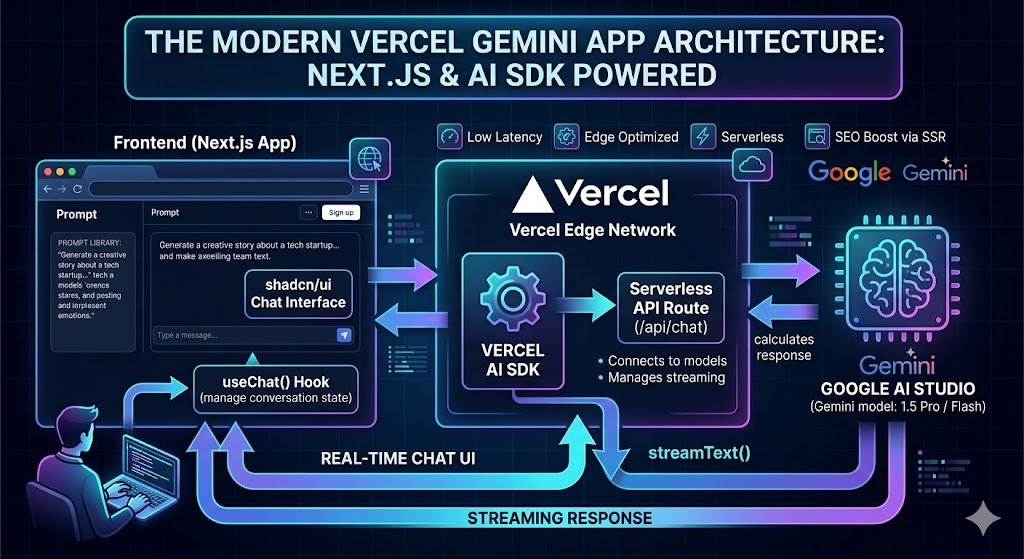
The developer ecosystem is witnessing a massive migration toward lightweight, AI-driven micro-applications. Following the recent rollout of Google’s new Gemini 3 Flash and Gemini 3.5 Flash models on the Vercel AI Gateway, a new wave of “Prompt Library” web apps hosted on Vercel is dominating search engine rankings and generating unprecedented organic web traffic.
Applications designed to curate, test, and execute AI prompts—most notably platforms like gemini-prompts.vercel.app—are seeing their user bases skyrocket, particularly across the Indian subcontinent.
The Viral Success of Prompt Vaults
Web applications specifically built to organize AI instructions are acting as magnets for digital traffic. Recent SEO analytics from April and May 2026 highlight the explosive growth of these niche platforms:
- Massive Traffic Spikes: Top-performing Vercel-hosted Gemini directories, such as
gemini-prompts.vercel.app, have reported a staggering 7,200% month-over-month increase in organic search traffic. - Indian Market Dominance: Over 79% of the core audience for these prompt repositories is located in India, with the vast majority (82%) accessing the platforms via mobile devices.
- High Session Engagement: By offering categorized prompts for tasks ranging from corporate document generation (like invoices and NDAs) to creative writing and coding, these single-page applications maintain high session durations and user retention.
Demystifying the Architecture: How These Apps Are Built
Behind this massive surge in traffic lies a highly optimized, serverless web development stack. Developers are abandoning heavy backend architectures to deliver instant AI responses directly to the user’s browser.
Here is the technical blueprint powering the modern Vercel Gemini app:
1. The Framework: Next.js (App Router)
The foundation of these applications is Next.js. By utilizing React Server Components (RSCs) and Server Actions, developers achieve lightning-fast server-side rendering. This is crucial for SEO, as search engine crawlers can instantly read and index the pre-rendered text of the prompt libraries, driving the organic traffic boom.
2. The Engine: Vercel AI SDK
The Vercel AI SDK acts as the critical bridge between the web interface and Google’s large language models. Before this SDK, building an AI app meant manually handling connection timeouts and complex API fetching logic.
streamText: Instead of waiting for the Gemini model to generate a complete block of text, the AI SDK utilizes Edge functions to stream the response word-by-word, drastically reducing perceived latency.useChatHook: This frontend React hook automatically manages the conversation state, handling the user’s input and the AI’s response array without the need for complex state management tools.
3. The Brain: Google Gemini 3 Flash
With the integration of the newly released Gemini 3 Flash on the Vercel AI Gateway, developers now have access to a model that runs at 3x the speed of its predecessors while consuming 30% fewer tokens. The Vercel platform allows developers to route traffic through the AI Gateway, avoiding the need to configure direct Google Cloud credentials and offering zero data retention policies for heightened privacy.
4. UI and Database Integration
Most of these platforms utilize Tailwind CSS alongside component libraries like shadcn/ui for sleek, dark-mode aesthetics. For data persistence—such as saving user history, chat logs, or prompt templates—developers frequently deploy Vercel Postgres and Vercel Blob for efficient object storage.
Strategic Value for Digital Publishers
For digital media platforms and independent developers, deploying a lightweight Next.js prompt application on Vercel represents a highly lucrative digital strategy. Because “Gemini AI prompts” remains a high-volume search query, these serverless apps serve as excellent funnels for organic traffic.
Once user flow is established, publishers can effectively monetize the traffic through niche ad networks, programmatic advertising, or premium subscription tiers for advanced AI document generation tools.